What it may address
Selected hollowness, visible tendons, prominent superficial veins, and reduced soft-tissue coverage may improve when volume restoration is appropriate.

Structural & Regenerative Aesthetics
Autologous fat transfer for selected patients who want to restore volume to the backs of the hands and soften the prominence of veins, tendons, and bony contours.
Understanding the procedure
Hand rejuvenation with fat grafting uses a patient’s own fat to restore selected volume beneath the skin on the back of the hands. Fat is harvested from a suitable donor area, prepared, and placed carefully to soften a hollow, veiny, or bony appearance.
The aim is a balanced, natural-looking contour—not to erase every vein, line, or sign of aging. Planning depends on skin quality, tissue thickness, vascular anatomy, available donor fat, and the degree of volume loss.
Selected hollowness, visible tendons, prominent superficial veins, and reduced soft-tissue coverage may improve when volume restoration is appropriate.
Fat grafting does not directly remove pigmentation, sun spots, or all texture changes. Separate skin-directed treatment may be discussed when appropriate.
Authentic patient media
Immediate fullness includes swelling and should not be interpreted as the final result.
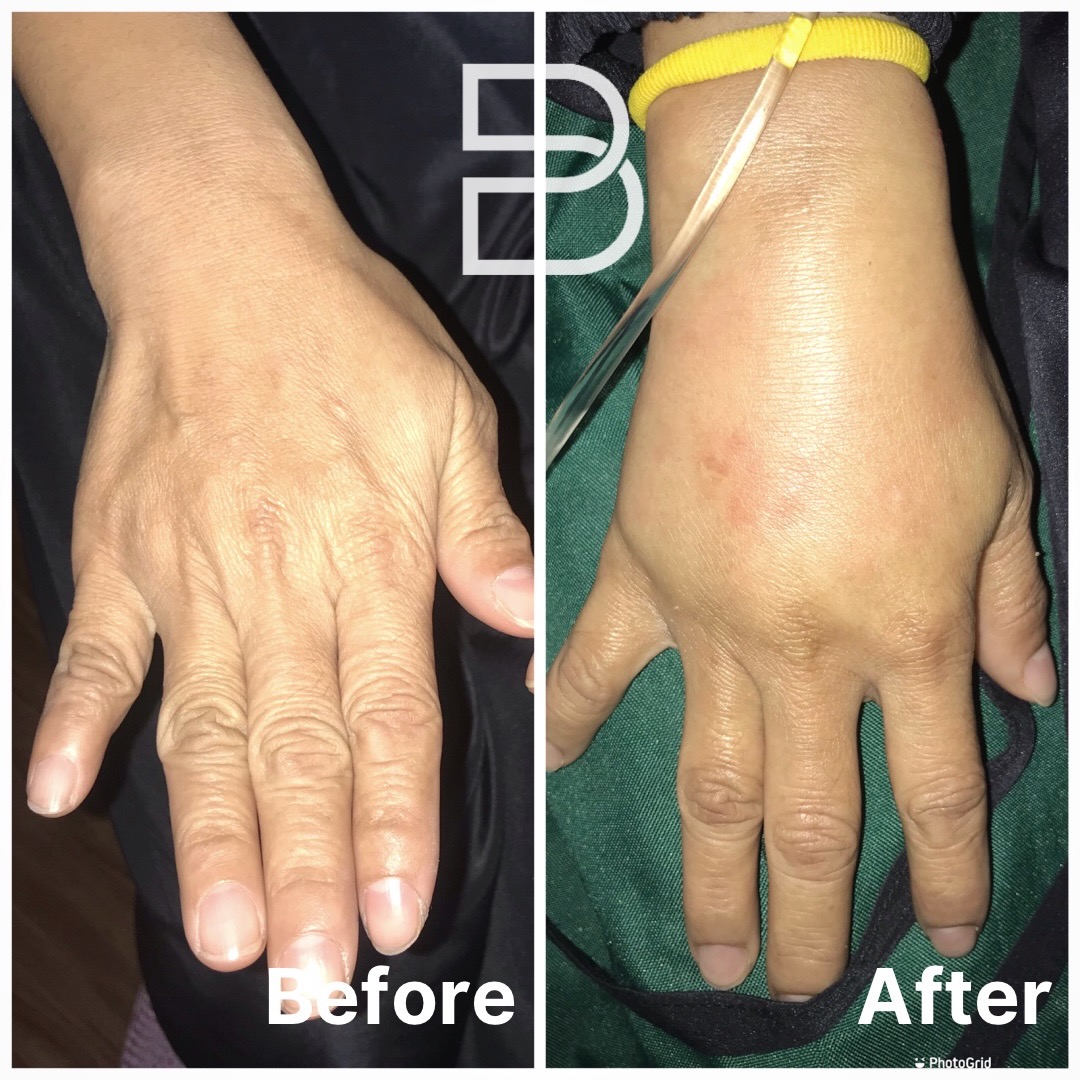
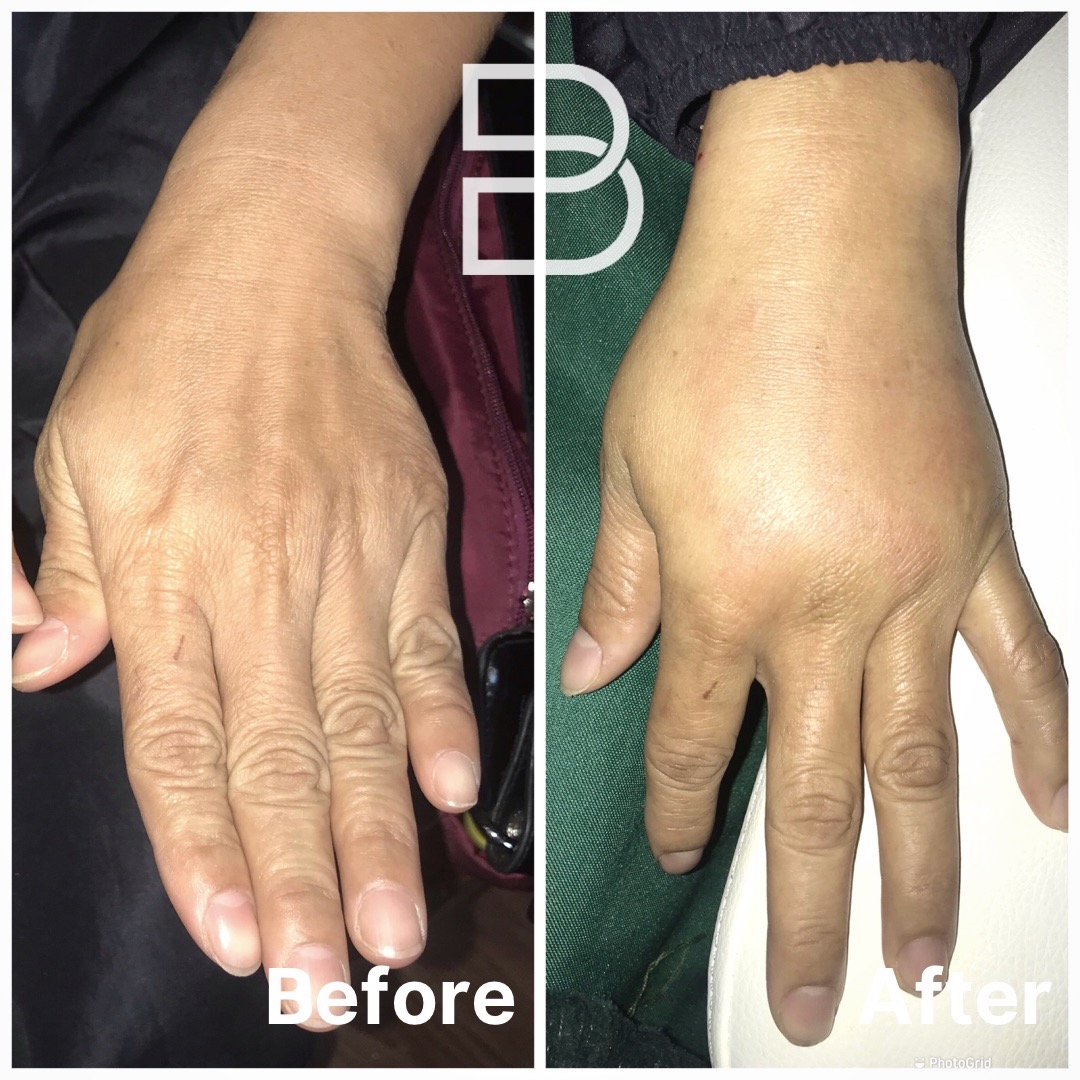
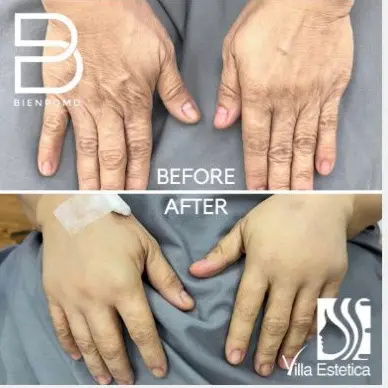
Individual anatomy, angle, timing, fat survival, and healing vary. Photographs do not guarantee a specific outcome.
Recovery and limitations
Temporary swelling, bruising, tenderness, firmness, and altered sensation may occur in the hands and donor area. Some transferred volume may be resorbed, and the retained contour becomes clearer over time.
Patients with hand volume loss, visible tendons or veins, realistic expectations, suitable donor fat, and health appropriate for the procedure may be candidates.
Risks may include swelling, bruising, infection, asymmetry, contour irregularity, fat resorption, cysts or fat necrosis, sensory changes, donor-site symptoms, and rare vascular or nerve injury.
Patient questions
It places a patient’s prepared fat beneath the skin of the hands to restore selected volume and soften prominent underlying structures.
Volume is visible immediately, but swelling contributes to the early appearance. Final retained contour is assessed after healing.
No. Fat survival varies and some volume may be resorbed.
It primarily restores volume. Surface pigmentation and texture may require a separate plan.
An in-person assessment reviews hand anatomy, skin quality, volume loss, medical history, donor areas, and goals.
Consultation
Planning begins with an in-person assessment of the hands, volume loss, medical history, and available donor tissue.